
Seeing the World Teleologically
Michael Sandel, Winnie-the-Pooh, and the Problem With Modern Liberalism

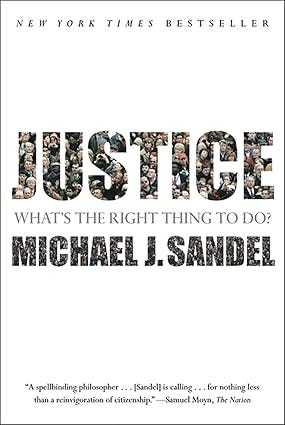
In the library where I work, I picked up a copy of Michael J. Sandel’s bestseller, Justice: What’s The Right Thing to Do. Skipping past the chapters on Bentham, Mill, Kant, and Rawls, I jumped straight to Sandel’s chapter on Aristotle (of course I did).
My attention was captured when Sandel noted that children instinctively view the world teleologically, only to have that understanding drummed out of them in adulthood.
We don’t think as much about teleology as did our ancestors, though the noun “telos” has risen sharply since the end of the last century. “Teleological” refers to explanations, actions, or systems that are understood in terms of their final purpose, design, or end (telos in Greek). In simple terms, a teleological explanation answers the question, “What is it for?”
Think, for a moment, about the chair you’re sitting on right now. (I would have said the chair I’m sitting on as I write, except I do all my work on a wobble stand).
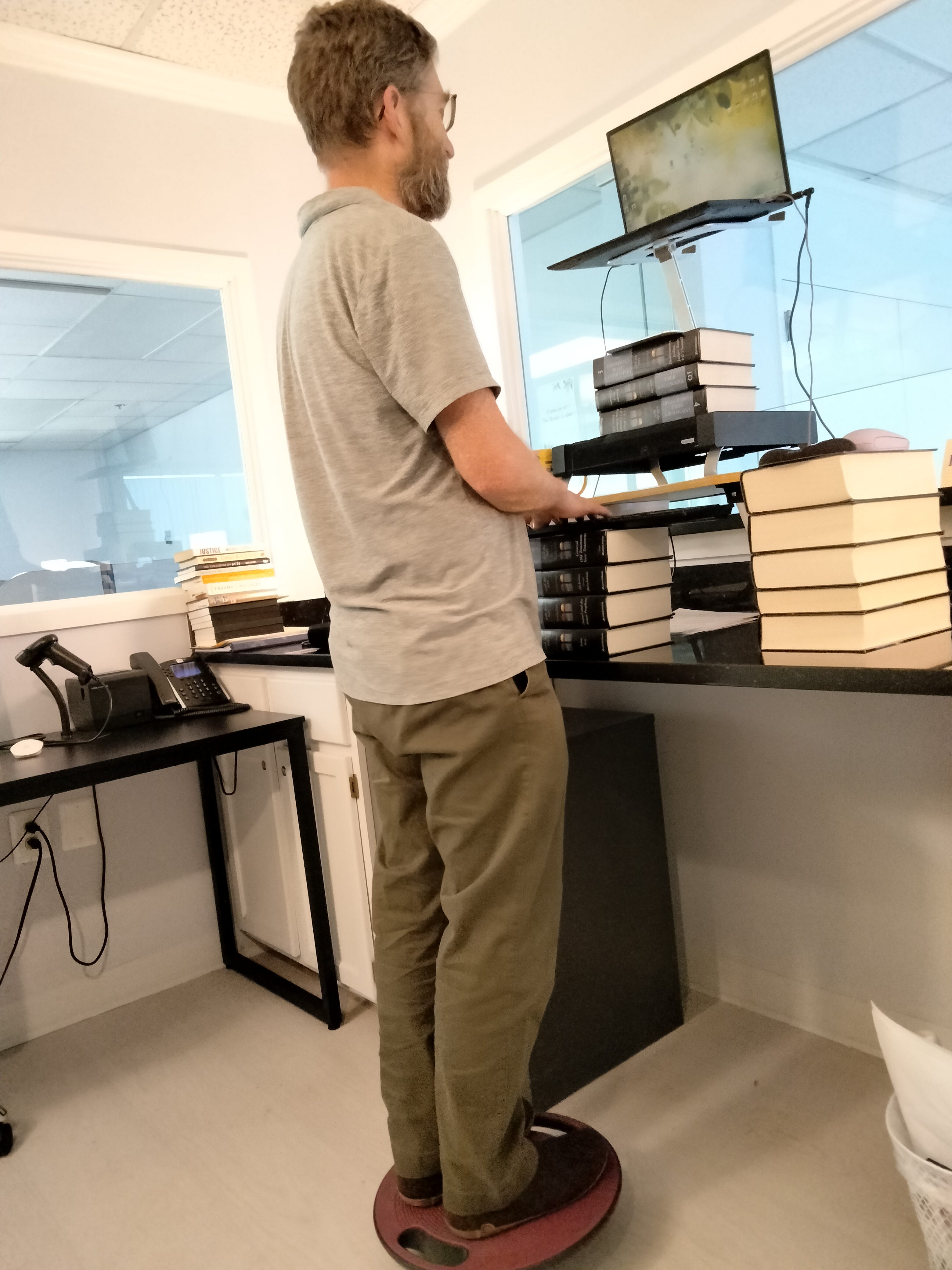
Since most people don’t appreciate wobble stands, I’ll stick to chairs. Using Aristotelian categories, we can address the causes of chairs as follows.
Material Cause. The Material Cause of a chair addresses the question, “What is it made of?”, and the answer is likely wood. (Okay, I know they’re making chairs from recycled ocean plastic, but I’m not talking about that type of chair right now.)
Formal Cause. The Formal Cause would address the question “What gives this its form or structure?”, and the answer would be the design or shape that makes something a chair rather than, say, a table (or a wobble stand).
Efficient Cause. The Efficient Cause would address the question, “What brought it into being?”, and the answer would be the agent—in this case, a carpenter—who built the chair. As a subdivision of efficient causality, we might also speak of Instrumental Causes, namely the tools and processes employed to bring the chair into being, such as a hammer, saw, chisel, etc..
Final Cause. The Final Cause addresses the question, “What is it for?”, and addresses the purpose of the chair, namely to be sat on (leaving aside all the perverse utility functions to which a chair can be put).
The important take-home point is that the last type of causation (what Aristotle called the Final Cause) addresses the question of teleology—-the meaning and purpose of a thing, the reason for which a thing exists.
Of course, that is very different from how we think about causes today, and we are less inclined to use teleological explanations when describing the world. And that’s just the point. At least, it’s Michael Sandel’s point in Justice: What’s The Right Thing to Do.
Sandel, who serves as the Anne T. and Robert M. Bass Professor of Government at Harvard University, argues that modern science has vanquished teleological explanations, orienting us against seeing the world as a purposeful whole. In the process, final causes lose the explanatory force they had for Aristotle and the classical tradition.
“In the ancient world, teleological thinking was more prevalent than it is today…. With the advent of modern science, nature ceased to be seen as a meaningful order. Instead, it came to be understood mechanistically, governed by the laws of physics. To explain natural phenomena in terms of purposes, meanings, and ends was now considered naïve and anthropomorphic.” p. 189
Certainly, sequestering teleological questions in the scientific pursuit can be purely methodological without necessarily implying a false world picture; one can study mechanism without having a mechanistic mindset. But I have argued elsewhere that the methods by which we understand the world often overflow their banks to become totalizing metaphors for all of life. This has happened in much modern science where focus on purely material and efficient causes means that, as Sandel put it, “to explain natural phenomena in terms of purposes, meanings, and ends was now considered naïve and anthropomorphic.”
But—and this is important—there is one area where the mechanistic outlook has not succeeded in totally vanishing teleology, and that is in the imaginations of children. Again from Sandel:
“Despite this shift, the temptation to see the world as teleologically ordered, as a purposeful whole, is not wholly absent. It persists, especially in children, who have to be educated out of seeing the world in this way.” p. 189
As an example, Sandel draws on his own experience reading Winnie-the-Pooh to his own children.
This book, Sandel suggests, “evokes a childlike view of nature as enchanted, animated by meaning and purpose.” As an example of this “childlike view” of the world, Sandel cites the delightful passage from chapter 1 so familiar to all Pooh lovers.
Winnie-the-Pooh sat down at the foot of the tree, put his head between his paws and began to think.
First of all he said to himself: “That buzzing-noise means something. You don’t get a buzzing-noise like that, just buzzing and buzzing, without its meaning something. If there’s a buzzing-noise, somebody’s making a buzzing noise, and the only reason for making a buzzing-noise that I know of is because you’re a bee.”
Then he thought another long time, and said: “And the only reason for being a bee that I know of is making honey.”
And then he got up, and said: “And the only reason for making honey is so as I can eat it.” So he began to climb the tree.
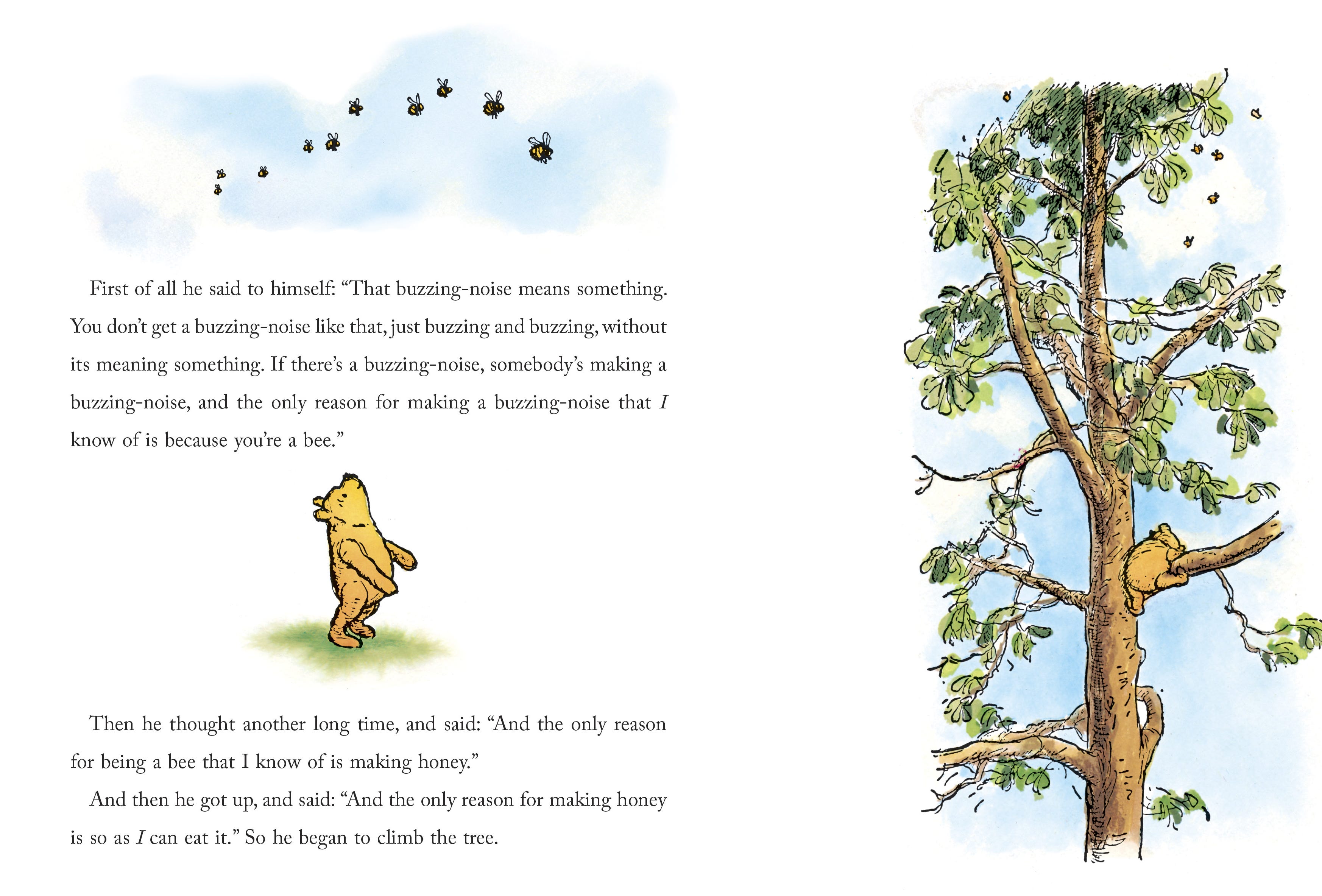
For Pooh, a buzzing noise is not just a buzzing noise: it is a sound pregnant with meaning. And bees exist for a purpose.
Pooh’s view of the world is somewhat egocentric since he sees everything existing for the satiation of his belly. Yet Pooh is nonetheless wiser than many modern thinkers, who believe we can understand the world independently of questions of meaning, purpose, and intentionality.
Pooh is basically good yet immature. He reflects a childish sense that the world is there for him. As he matures, Pooh will need to lose none of that sense of wonder and purpose. He will continue to see bees and trees and honey, the world itself, as inherently purposeful—and thus in some sense enchanted—yet with a purpose pointing beyond himself (and even beyond itself).
Many of us never reach that stage of maturity. We shed the childish sense of wonder of a world that exists to serve our appetites, without ever growing into the childlike sense of wonder at the privilege of living in a world that is full of meaning, glory, and intention.
Pooh realized that the buzzing-noise means something. Do the beautiful internal workings of a call mean something? Does the harmonious dance of the celestial bodies mean something? Is the universe itself ordered toward purpose and intentionality?
Back to Sandel.
“Pooh’s childlike line of thought about the bees is a good example of teleological reasoning. By the time we are adults, most of us outgrow this way of viewing the natural world, seeing it as charming but quaint. And having rejected teleological thinking in science, we are also inclined to reject it in politics and morals.” (p. 190)
Ah, there’s the rub, and the central problem of the modern liberal political project. To talk about the ends (telos) for which human communities exist, and toward which they should be ordered, is necessarily to inquire into the purpose for which humanity exists. It is to ask questions such as, “What is the good life?” and thus, “What is the Good?” But that introduces into politics questions of values, metaphysics, and even theology. The problem is that since the Enlightenment it has become increasingly axiomatic that politics must be value-neutral. Though there are important exceptions (especially in regimes that have reacted against modern liberalism), modern statecraft has generally proceeded without open acknowledgement of any substantive notion of human flourishing or of the Good toward which human communities should be ordered. Thus, politics has tended to collapse into a closed system with no goal, no final principle, and no destination. In the modern world, we view this type of value-neutral politics as a feature and not a bug; the very essence of a free society. As Sandel explains,
“To attribute some purpose or end to political community in advance would seem to preempt the right of citizens to decide for themselves. It would also risk imposing values not everyone shares. Our reluctance to invest politics with a determinate telos, or end, reflects a concern for individual freedom. We view politics as a procedure that enables persons to choose their ends for themselves.” 192-93
The problem is that it has never been clear how the political enterprise can achieve coherence if there is no acknowledged end or goal towards which human society is oriented. But this is precisely the conceit of attempting to construct a political order on value-neutral premises. To pursue the common good independent of any conception of the Highest Good is to collapse the political enterprise into self-referentiality.
This is precisely why Alasdair MacIntyre predicted the collapse of liberalism. In his Harvard inaugural lecture “The Privatization of the Good,” MacIntyre noted that while liberalism presents itself as neutral and rational, it actually depends on unacknowledged moral traditions; it focuses on procedural categories like rights, rules, fairness, even though these categories become interminably debatable (and ultimately incoherent) when their grounding is not acknowledged, and indeed cannot be acknowledged within the terms left by the modern liberal order assumed by both left and right.
Liberalism presents itself as neutral and rational, it actually depends on unacknowledged moral traditions; it focuses on procedural categories like rights, rules, fairness, even though these categories become interminably debatable (and ultimately incoherent) when their grounding is not acknowledged, and indeed cannot be acknowledged within the terms left by the modern liberal order assumed by both left and right.
What is the solution? Maybe the answer lies in returning to teleology. Just as many of our top scientists are now realizing that we cannot do science properly without questions of purpose and intentionality (and thus Intelligence), so many political philosophers (including many associated with post-liberal conservatism) are now coming to realize that we cannot do law and statecraft without first settling metaphysical questions like, “what is the purpose of human society?” and “what is the Good toward which human communities should strive?”
Sandel gives a nod to this nascent understanding. In the second half of his chapter, Sandel gives Aristotle’s teleological conception of politics a fair hearing, even showing how it could apply to contemporary questions like affirmative action and political participation. He doesn’t go as far as MacIntyre, or even Pooh for that matter, but he does get pretty close with this fantastic ending of this chapter.
“Debates about justice and rights are often, unavoidably, debates about the purpose of social institutions, the goods they allocate, and the virtues they honor and reward. Despite our best attempts to make law neutral on such questions, it may not be possible to say what’s just without arguing about the nature of the good life.” 207
If Sandel is correct, then maybe we should pay more attention to Aristotle. And maybe Plato was onto something as well when he advocated rule by philosopher-kings. If we want a better world, perhaps we need to work toward the day when all politicians are philosophers, and all scientists are poets. If that seems out of reach, then maybe we should simply aim to become more like Winnie-the-Pooh.
Further Reading
A Teleological Odyssey: Homer’s Ethical Realism and Odysseus’ Emotional Labors
The Dark Side of Libertarian Freedom (Part 1): How an Anarcho-Capitalist Experiment Went Bad
The Dark Side of Libertarian Freedom (Part 2): Why Freedom for the Sake of Freedom Leads to Bondage
Subverting the Hero’s Journey: How Modern Stories Malform the Imagination